The crew packs up, the truck pulls away, and your yard is suddenly open sky where a large tree used to be. The tree is gone but what actually happened to all that wood?
It’s one of those questions homeowners rarely think to ask before the job and almost always wonder about afterward.
The answer is simple: in Portland, very little of a removed tree goes to waste.
The Smaller Branches Become Wood Chips
The first stop is usually the chipper.
As the tree comes down, the smaller branches and limbs are fed through a wood chipper. A medium-sized tree can produce several cubic yards of fresh arborist wood chips, also known as ramial wood chip mulch.
Where do the chips go?
In Portland, they’re commonly reused by:
- Homeowners who want free mulch
- Community gardens
- Local landscapers
- ChipDrop deliveries
- Wood Waste Management recycling facilities
After the January 2024 storm, Axios reported wood chip piles appearing throughout Portland neighborhoods as arborists donated material during storm cleanup.
Why are arborist chips valuable?
Fresh wood chips often outperform store-bought mulch because they:
- Break down more slowly
- Help suppress weeds
- Retain soil moisture
- Improve soil biology over time
Tip: If you’d like to keep the mulch for your property, mention it before the crew finishes. Most tree services are happy to leave it behind.
The Larger Logs Have More Options
The trunk doesn’t usually follow the same path as the branches.
Depending on the species and condition of the tree, the logs may become firewood, lumber, or something entirely different.
Option 1: Firewood
Douglas fir, oak, and maple all make excellent firewood.
Many Portland tree companies either:
- Leave the logs with the homeowner
- Cut them into manageable pieces
- Donate them to local firewood assistance programs
Option 2: Urban Lumber
Large, healthy hardwoods often have much greater value than firewood.
Species like Oregon white oak and bigleaf maple can be milled into:
- Furniture
- Live-edge slabs
- Flooring
- Shelving
- Custom woodworking projects
A single mature oak can produce hundreds of board feet of usable lumber instead of becoming waste.
Option 3: Community Projects
Sometimes removed trees continue serving the community.
After the January 2024 storm, wood from Portland’s historic Burrell Elm was milled into benches for local community centers, while a cross-section of the tree was preserved by the Oregon Historical Society.
It’s a unique example, but it shows how intentionally Portland often repurposes removed trees.
What Determines Where the Wood Goes?
Not every tree can be reused in the same way.
Several factors influence what happens after removal.
Species
Different species have different uses.
- Douglas fir: Excellent for wood chips and firewood
- Oak and maple: Suitable for firewood and lumber
- Other hardwoods: Often ideal for milling
Tree Condition
Healthy wood has the most reuse potential.
Trees affected by:
- Internal decay
- Severe rot
- Fungal damage
are usually chipped or composted because the wood isn’t suitable for lumber or quality firewood.
Tree Size
Larger trees create more opportunities.
Generally:
- Small trees → Mostly chipped
- Medium trees → Firewood
- Large trees (18″+ diameter) → Firewood or lumber
Your Preferences
One factor many homeowners overlook is their own input.
If you’d like to:
- Keep the wood chips
- Save logs for firewood
- Explore urban milling
- Donate usable wood
tell your tree service before work begins.
Many Portland arborists already work with local millers, recycling facilities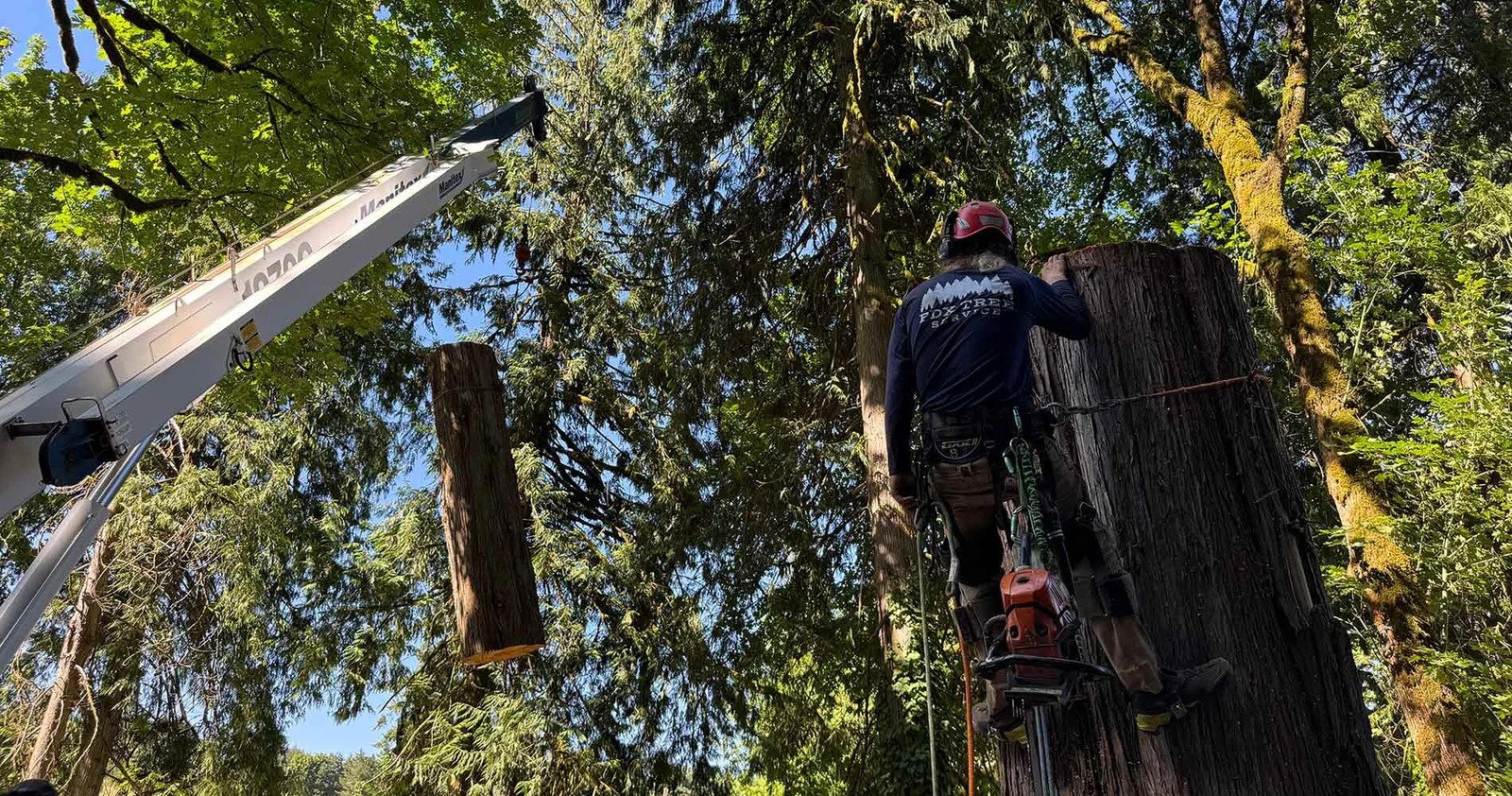 and firewood programs.
Conclusion
A removed tree doesn’t simply disappear.
Instead, it often becomes:
- Mulch for local gardens
- Firewood for homes
- Lumber for woodworking projects
- Material for community spaces
Thanks to programs like ChipDrop, Wood Waste Management, urban sawmills, and local firewood organizations, Portland has built an impressive system for giving removed trees a second life.
The best way to influence what happens to your tree is simple: ask before the work begins. In many cases, your tree can continue serving a purpose long after it’s been removed.
About PDX Tree Service
PDX Tree Service provides professional tree removal, stump grinding and debris management throughout Portland and the surrounding metro area.
Whether you’d like to keep the wood chips, save firewood, or explore lumber options from a large tree, our team can explain what’s possible before the job starts.
I’ve tried a few sites lately and this one really stands out. The interface is smooth and the payouts are surprisingly fast. Definitely my new go-to spot. Check it out at brnnbet42
The login process is super quick and the games are top notch. Had a great run last night and won big. Highly recommend 178jililogin
[204]Bento123: Login Resmi Situs Slot Gacor Hari Ini Terpercaya,bento123 menyediakan akses login resmi dengan kemudahan download APK. Temukan pola slot pragmatic terbaru dan cara deposit via dana yang praktis. Daftar sekarang! visit: bento123
Honestly, the loading speed here is impressive. I had a few issues with other platforms, but gv999apk works like a charm on my phone. Highly recommended for casual players.
Really impressed with the payout speed here. No hassle at all and the customer support is actually helpful. Highly recommend giving it a shot at bdku9i
[1086]678bet login এবং অ্যাপ ডাউনলোড | বিকাশ ক্যাসিনো ডিপোজিট,678bet login করুন এবং সহজেই app download করে নিন। বিকাশ দিয়ে ক্যাসিনো ডিপোজিট ও অনলাইন স্লট গেম খেলার নিয়ম জানতে আজই জয়েন করুন। visit: 678bet